NIVAL — Passive cooling systems
Cooling cities
without cooling
the planet.
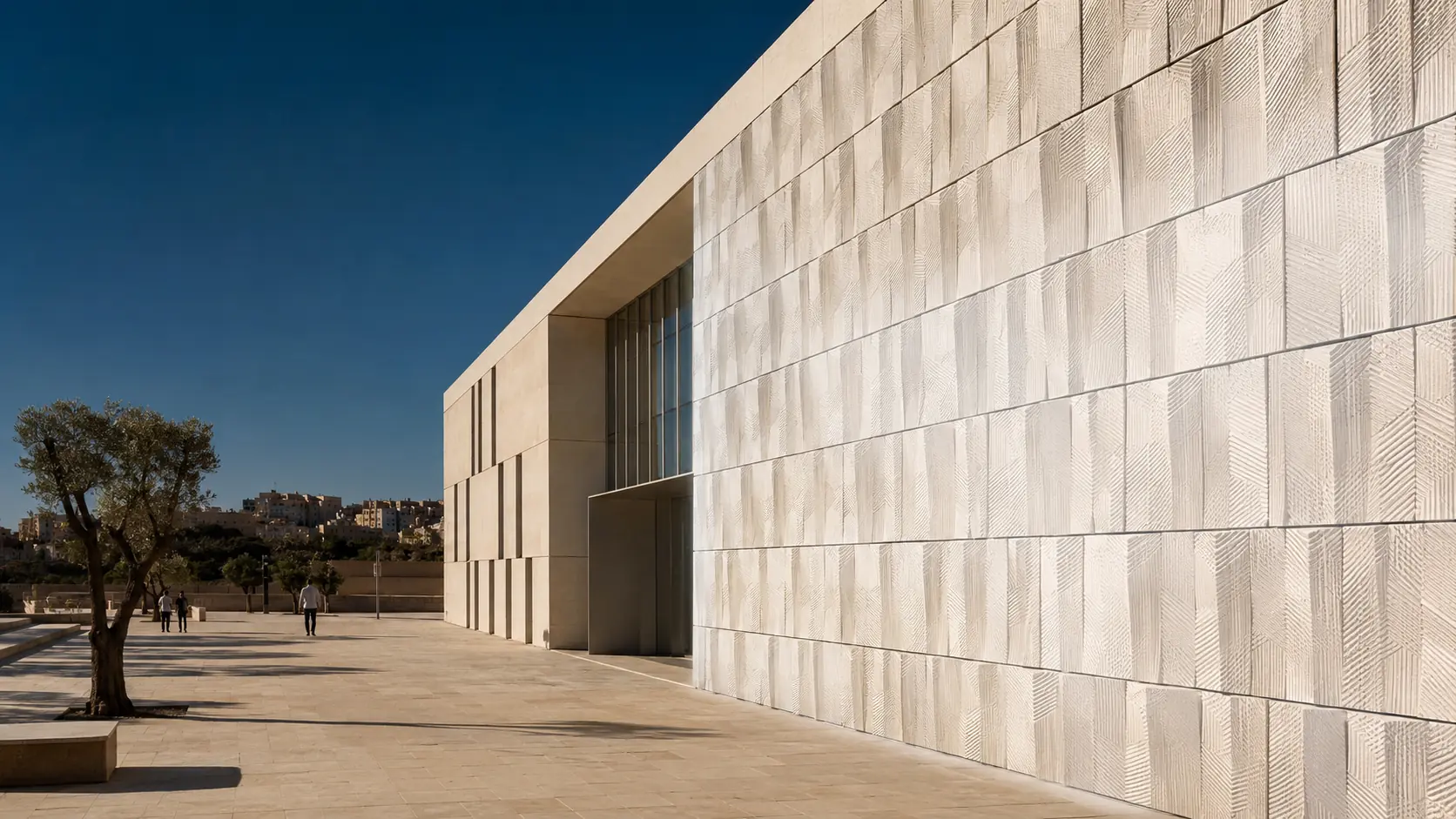
A passive ceramic skin that rejects heat before it enters the building — no refrigerant, no facade compressor.
- Refrigerant at the facade
- 0
- Peak surface temperature
- −12°C
- Peak cooling load
- −28%
The problem
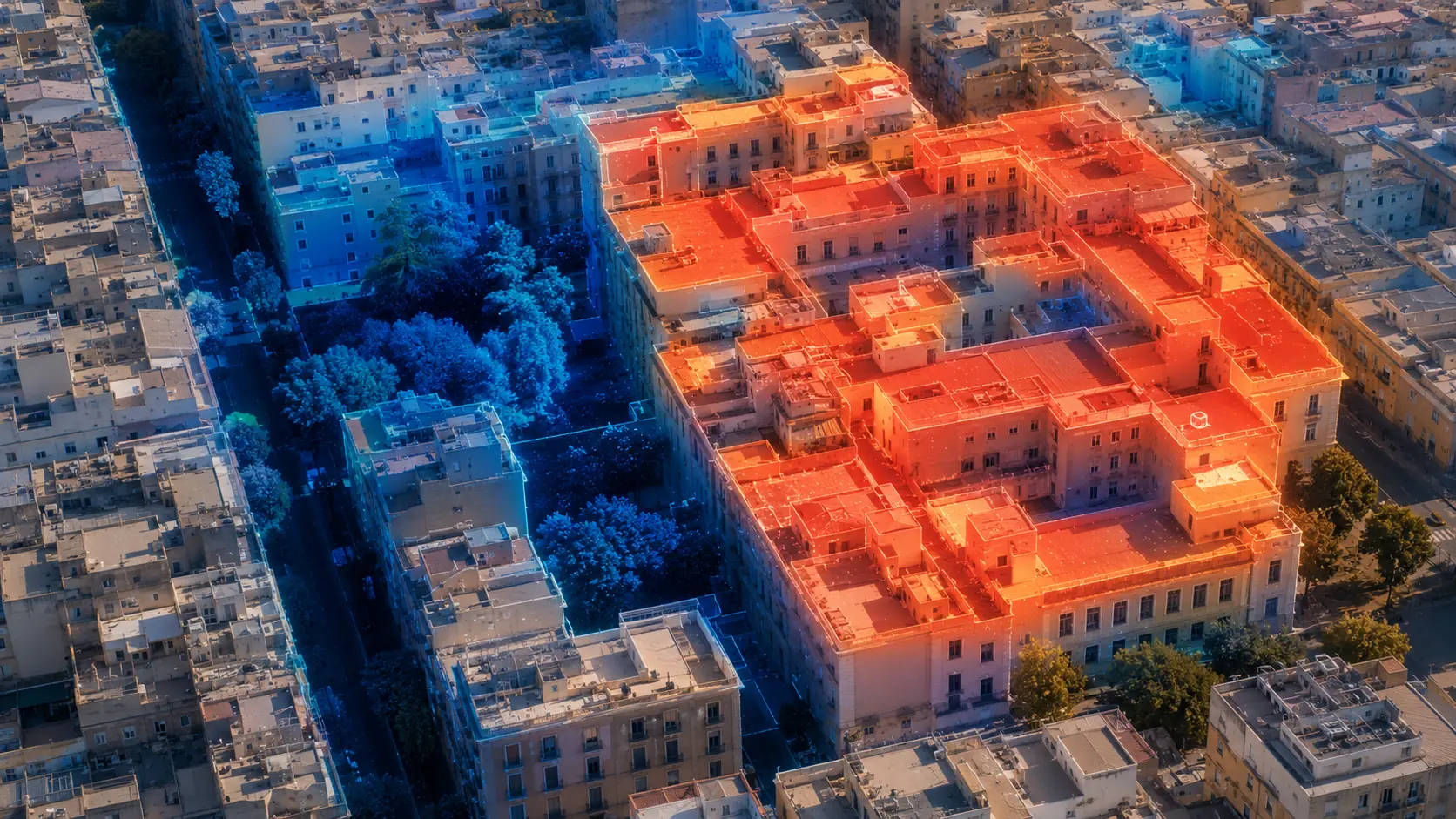
The hottest part of the city is the city itself.
Roofs, asphalt and blank facades store solar heat, then release it back when people need relief most.
- Roofs
Dark membranes hold solar gain long after sunset.
- Asphalt
Paved ground stores heat and re-radiates it at night.
- Blank facades
Sealed envelopes push the whole load onto compressors.
The insight
Cooling starts too late.
Conventional systems remove heat after it has crossed the envelope. NIVAL moves the cooling event to the skin.
Move the cooling event from the machine to the material.
Conceptual process model. NIVAL is a speculative portfolio concept.
Next
See how the material does the work.
A modular rainscreen tile combines porous ceramic, a capillary wick and a standard rail cassette.